




7 Handcrafted Leather Hat Maintenance Tips That Work
Last Updated: November 1, 2026
Quick Summary
Maintain a leather hat by brushing off dust first, then wiping with a barely damp microfiber cloth and a mild leather cleaner applied to the cloth, never the hat. Condition sparingly two to three times a year, air dry in the shade, and store in a breathable cotton bag.
- Brush the crown and brim in small circles from the top down after every few wears.
- Patch test any cleaner on the inside sweatband and wait fifteen minutes before continuing.
- Apply a pea-sized amount of conditioner and let it absorb for twenty minutes before buffing.
- Blot a wet hat, reshape while damp, and air dry in the shade away from heat.
- Store hats in a breathable cotton bag stuffed with acid-free tissue, never plastic.
Table of Contents
- Start With the Right Tools and a Gentle Touch
- How to Clean a Leather Hat Without Soaking It
- Choosing and Applying a Leather Hat Conditioner
- How to Protect a Leather Hat From Water and Weather
- Leather Hat Storage and Sweatband Care Between Seasons
- Book a Care Consultation at the Montreal Atelier
- Frequently Asked Questions
Start With the Right Tools and a Gentle Touch
A handcrafted leather hat rewards patience, not scrubbing. For a finely made hat worth caring for properly, see the Zena Panama Hat. The care routine we recommend is simple: fewer products, softer tools, and a lighter hand than you think you need.

You need very little to begin:
- A soft brush or lint brush for loose dust
- Two microfiber cloths, one dry and one barely damp
- A mild leather cleaner, never household soap
A common mistake is reaching for too much water and too much product. Leather is skin. It wants balance, not a bath.
Removing Surface Dust and Loose Dirt
Dust first, always. Brush the crown and brim with a dry soft brush in small circles. Work from the top down so debris falls away rather than settling back into the grain.
Do this after every few wears rather than only once a season. Surface dirt that sits becomes residue buildup, and residue dulls the finish faster than wear does.
Choosing a Leather-Safe Cleaner and Spot Testing
Not every cleaner belongs on a handcrafted leather hat. Harsh cleaners strip the oils that keep leather supple, and once those oils are gone, cracking follows.
Pick a mild leather cleaner made for finished leather. Then test it before you trust it.
Skipping the patch test on a dark or hand-finished hat can leave a light patch that conditioner may not hide.
How to Clean a Leather Hat Without Soaking It
Cleaning a leather hat is spot work, not washing. Excess moisture is the enemy: it softens the shape, swells the sweatband, and can leave water stains as it dries. Keep the cloth damp, never wet, and clean one small area at a time.
Follow this order:
- Brush off all loose dust and dirt.
- Wipe the surface with a barely damp microfiber cloth.
- Apply a small amount of leather cleaner to the cloth, not the hat.
- Work in gentle circles over one section at a time.
- Wipe away residue with a clean dry cloth.
- Let the hat air dry in the shade before conditioning.
Never soak the hat, never scrub a stain hard, and never dry it near a radiator or in direct sunlight. Heat and moisture together are what ruin shape and stiffness.
A Step-by-Step Spot-Treatment Decision Tree
Different marks need different handling. Use this simple decision path:
- Fresh water mark? Blot, then air dry in the shade. Most fade on their own.
- Oily mark? Blot with a dry cloth, then dust lightly with cornstarch. Brush off after an hour.
- Powdery residue? Brush gently with a dry soft brush. Do not add water.
Pushing a stubborn stain usually makes it worse.
Cleaning is spot work, so follow this order and keep moisture to a minimum.
| Step | What to do | Note |
|---|---|---|
| 1 | Brush off all loose dust and dirt | Dust first, always |
| 2 | Wipe with a barely damp microfiber cloth | Damp, never wet |
| 3 | Apply leather cleaner to the cloth, not the hat | Small amount only |
| 4 | Work in gentle circles over one section | One small area at a time |
| 5 | Wipe away residue with a clean dry cloth | Use a separate dry cloth |
| 6 | Let the hat air dry in the shade | Before conditioning |
Choosing and Applying a Leather Hat Conditioner
Conditioner is what keeps leather soft, flexible, and resistant to cracking. Apply it sparingly, two to three times a year, and more often if the hat sees regular outdoor wear.
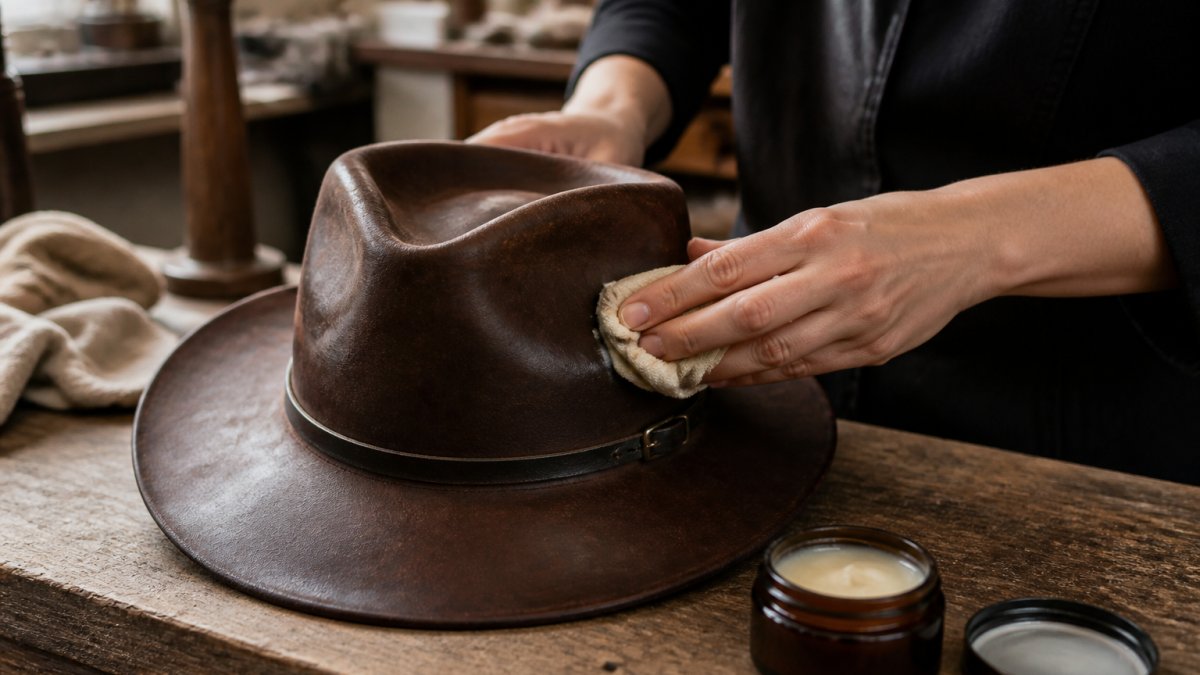
Here is the method we use:
- Brush the hat clean and let it dry fully.
- Warm a pea-sized amount of conditioner between your fingers.
- Rub it into the leather in thin, even layers.
Less is more. You can always add another thin layer, but you cannot easily remove too much.
If you want to see how a well-finished leather-accented piece should feel before you condition it, the Montreal Mystic Felt Hat shows the texture to aim for.
Matching Conditioner to the Leather Type and Finish
Leather type changes the rulebook. Smooth finished leather takes a standard cream conditioner. Oiled or waxed leather wants a matching wax, not a cream. Suede and nubuck need a brush and a suede-specific protector, never a liquid conditioner.
Leather grain matters too. Full-grain leather is dense and forgiving. Corrected-grain surfaces are thinner and need a lighter touch. If you are unsure, test on the sweatband first and go lighter than you think.
Patch Testing and Product Compatibility
Before you apply any conditioner to the visible surface, patch test. Choose a hidden spot, the inside of the sweatband or under the brim, and apply a small amount of product.
Compatibility matters as much as technique. Water-based conditioners suit most smooth finished leathers and are less likely to darken light colors. Oil-based or wax-heavy products penetrate deeper but can darken leather and leave residue on suede or nubuck.
How Much and How Often
Condition when the leather feels dry to the touch, rather than on a fixed calendar. For a hat worn regularly outdoors, that might mean every two to three months; for a hat worn occasionally, two to three times a year is enough.
If you are ever unsure, condition less and wait a week. You can add another thin layer; removing excess is far harder.
How to Protect a Leather Hat From Water and Weather
Water exposure is the quiet threat to any leather hat. For a rugged option built for outdoor conditions, see the Dust In The Wind Rancher. A light rain is usually fine. Soaking is not.
For everyday habits:
- Carry a cloth for sudden showers and blot rather than rub.
- Store the hat out of humid rooms.
- Reapply repellent at the start of wet seasons.
Recovering a Hat That Got Wet
Act fast, but gently. Shake off excess water and blot the surface with a dry cloth. Reshape the crown and brim by hand while the leather is still damp, then let the hat air dry in the shade, away from heat and direct sunlight.
Avoid speeding drying with a hairdryer or radiator, as heat can set wrinkles and shrink the sweatband.
Step-by-Step Weather Recovery
When a hat gets caught in real weather, follow this sequence:
- Shake off loose water immediately. Do not wring or twist the hat.
- Blot the surface with a dry microfiber cloth, working from crown to brim.
- Reshape while damp. Use your hands to restore the crown crease and brim curve. For structured hats, a hat block or clean bowl can help hold shape during drying.
- Air dry in the shade at room temperature. Avoid direct sun, radiators, and hair dryers, heat sets wrinkles and can shrink the sweatband.
- Check the sweatband. If it is soaked, blot it and let it dry fully before wearing. A damp sweatband stretches and can leave marks.
- Condition lightly once dry to restore moisture balance and prevent stiffness.
If the hat was soaked through, not just rained on, expect the leather to feel stiffer for a day or two. If the shape has collapsed or the brim has warped beyond hand-shaping, stop and consult a professional before forcing it back into form.
Leather Hat Storage and Sweatband Care Between Seasons
Storage is where good hats quietly fail. Sweat, perfume, hairspray, and pins and badges all leave residue that ages leather and lining. Before you store a hat for the season, clean the sweatband, remove metal pins, and let everything dry fully.
A simple seasonal routine:
- Wipe the sweatband with a barely damp cloth and air dry.
- Brush the crown and brim free of dust.
- Condition lightly if the leather feels dry.
A structured leather hat holds its shape best when stored properly. The Modern Mountie is one such hat that benefits from proper off-season care.
Book a Care Consultation at the Montreal Atelier
If you are ready to see a piece worth caring for properly, the Nashville Rebel Rancher Hat is a good place to start,

Frequently Asked Questions
How often should you condition a leather hat?
Condition a leather hat every three to six months, or whenever the surface looks dull and feels dry. Hats worn often in dry indoor heating or through winter weather may need conditioning closer to every three months. Apply a small amount of leather hat conditioner with a soft cloth, work it in evenly, and let it absorb before buffing. Over-conditioning leaves residue buildup, so less is more.
Will water ruin a leather hat?
A light rain will not ruin a well-maintained leather hat, but soaking it can cause stiffness, shrinkage, and cracking. If your hat gets wet, blot it with a soft cloth, reshape the crown and brim, and air dry it in the shade away from direct sunlight and heat. Never place it near a radiator or use a hair dryer. Consistent conditioning helps the leather resist moisture in the first place.
How should you store a leather hat?
Store your leather hat in a cool, dry place away from direct sunlight, heat, and humidity. Keep the shape by resting it on a clean surface or a hat form, and avoid hanging it by the brim. A breathable dust bag protects it from dust and residue buildup without trapping moisture. For seasonal leather hat storage, clean and condition first, then tuck it away with a cedar block to deter pests.
Can you dry clean a leather hat?
Avoid dry cleaning a leather hat. The solvents used in dry cleaning can strip natural oils from the leather, leaving it stiff, dull, and prone to cracking. For surface dirt, use a soft brush or lint brush followed by a damp cloth. For deeper marks or specialist finishes, have the hat cleaned by a professional who works with leather, and always patch test any cleaner on a hidden area first.
Caring for a handcrafted leather hat comes down to a gentle, consistent routine: brush often, clean sparingly, condition lightly, and store it well. Ophelie Hats makes each piece to last for years, from world-class leather and wool to hand-blocked shapes finished in our Montreal atelier. Our custom options let you build a hat that fits your style and your care habits. Get started with Ophelie Hats and give your headwear the care that keeps it beautiful season after season.

Leave a comment