




How to Choose a Leather Hat Style That Fits Your Face
Quick Summary
To choose a leather hat style, weigh three things: your face shape, the silhouette you like, and how you will wear it. Balance a high crown or wide brim against your proportions, and choose the leather type for your climate, since full-grain suits everyday wear and suede suits dry days.
- Start with the outfits you wear most, then narrow the silhouette to match.
- Long faces benefit from a wider brim that shortens the visual length.
- Full-grain leather develops a patina over time and sheds light rain.
- Suede and nubuck absorb water and should be kept for dry-weather wear.
- If you fall between sizes, size up rather than down.
Table of Contents
- How to Choose a Leather Hat Style That Fits Your Face
- What Actually Matters When You Choose a Leather Hat Style
- How to Choose a Hat for Your Face Shape
- Comparing Leather Hat Silhouettes: Crown and Brim
- Types of Leather for Hats and How They Behave
- How Should a Hat Fit? A Step-by-Step Sizing Guide
- Matching a Leather Hat to Season, Occasion and Wardrobe
- How to Care for a Leather Hat So It Keeps Its Shape
- Choosing Your Leather Hat: Next Steps With Ophelie Hats
- Frequently Asked Questions
How to Choose a Leather Hat Style That Fits Your Face
Last Updated: November 17, 2026
Choosing a leather hat style comes down to three things: your face shape, the silhouette you like, and how you plan to wear it. A crown height or brim width changes the look of a hat on different faces, so it helps to consider both before you choose. Get those three choices right and the hat will look like it was made for you.
What Actually Matters When You Choose a Leather Hat Style
The most useful question is not "what is trendy" but "what will I wear this with, and how often." A rancher with a pinched crown suits a wardrobe built around denim and boots. A structured fedora fits better with tailoring. Start with the outfits you wear most, then narrow the silhouette to match.
Next, decide how much structure you want. Stiff brims hold their line in wind. Softer brims move with you and read more relaxed. Neither is better in general, only for a given day.
How to Choose a Hat for Your Face Shape
Face shape is the most common starting point, and it works best as a guide rather than a rule. The aim is balance: a hat with a crown height and brim width that offsets your proportions.
- Oval faces suit most silhouettes, so you can prioritize style.
- Round faces usually look balanced under a higher crown and a brim with some structure, which adds vertical line.
- Square faces often soften well under a slightly curved or flipped brim.
- Long faces benefit from a wider brim that shortens the visual length.
Try the hat on before you decide. The mirror will tell you more than any chart.
Comparing Leather Hat Silhouettes: Crown and Brim
Crown and brim work together. A high crown with a wide brim creates a bold statement. A lower crown with a narrow brim reads sleek and understated, which suits our more edgy, minimal pieces.
A pinched or teardrop crown adds character and works well for a rancher. A flat crown with a short brim gives a clean, modern line. When comparing styles, look at the silhouette first, then the details like straps or trim.
Types of Leather for Hats and How They Behave
Leather choice affects how a hat wears, looks, and ages, and the differences are structural, not cosmetic. The grain, the tanning method, and the finish determine whether a hat sheds rain, softens with wear, or stiffens in the cold.
| Leather type | Strengths | Trade-offs | Best for |
|---|---|---|---|
| Full-grain leather | Durable, develops a patina over time, sheds light rain | Heavier, stiffer at first, can darken with moisture | Everyday wear, long-term use, variable weather |
| Top-grain leather | Smoother surface, lighter than full-grain | Less patina, can crack at flex points over years | Dressier looks, milder climates |
| Suede | Soft, matte, comfortable from day one | Shows marks, dislikes rain, needs a brush | Dry-weather, relaxed looks |
| Nubuck | Velvety feel with more abrasion resistance than suede | Still water-sensitive, can spot | Casual wear, dry days |
| Lightweight leather | Easy to wear for hours, good for travel | Less structure, brim can droop | All-day comfort, packable styles |
Full-grain leather keeps its outer grain intact, which is why it suits a hat you plan to keep for years. Top-grain has the outer layer lightly sanded, so it looks dressier. Suede and nubuck are sanded on the flesh side, which gives a soft hand feel.
How leather behaves across weather and seasons matters as much as the label. In cold, dry months, full-grain holds its shape and stiffens slightly, which helps a structured crown keep its line. In heat and humidity, leather softens and the sweatband can stretch, so a hat that fits snugly in January may feel loose in July. In rain, full-grain with a waxed or oiled finish beads water, while suede and nubuck absorb it and should be kept for dry days. Storage matters too: leather left in a hot car or a dry attic can crack at the crown, while leather stored damp can grow mildew.
How Should a Hat Fit? A Step-by-Step Sizing Guide
A good fit keeps the hat secure without pressure, and leather can soften with body heat over time. Follow these steps and then account for the leather-specific adjustments below.
- Measure your head. Wrap a soft tape around your head just above the ears and across the forehead, keeping the tape level. Note the circumference in centimetres. Measure twice, a half-centimetre changes the size.
- Compare with the sizing chart. Match your measurement to the size on the product page. If you fall between sizes, size up rather than down, because a leather sweatband can be padded but not stretched safely.
- Check the inner band. It should sit snugly around the head without pinching the temples or leaving a red line after ten minutes. The front of the band should rest just above the eyebrows.
- Test the brim. It should sit level and not block your peripheral vision. A brim that dips in front will feel heavier by the end of the day.
- Wear it for a few minutes. Notice whether it feels secure when you turn your head, and whether the crown touches the top of your head, a gap there means the crown is too tall for your proportions.
Leather-specific fit adjustments matter more than most guides admit. Hair volume changes fit: a hat measured over long hair may feel loose when hair is tied back, so measure in the way you will most often wear it. A leather sweatband will mold to your head with wear, which is why a slightly snug fit usually loosens over the first few weeks, but it will not shrink back if you overstretch it.
Reshaping and returns are worth checking before you buy. Return policies vary, so check the terms with the seller before you order or wear the hat outside. If you are ordering online, ask whether a size exchange is available.
Watch out: do not buy a leather hat that feels tight across the forehead in the hope that it will 'give', leather stretches most at the sweatband, not the crown, so a tight forehead stays tight.
Matching a Leather Hat to Season, Occasion and Wardrobe
Leather handles seasons differently. In cold, dry months it holds its shape well. In rain, a full-grain hat sheds water better than suede, which should be kept for dry days. In summer, a lighter build and a wider brim give more shade.
For occasions, a structured rancher or fedora suits smart-casual settings, while a more understated crown fits everyday errands. Match the hat to the outfit you are wearing that day, not just the one in your head.
How to Care for a Leather Hat So It Keeps Its Shape
Good care helps a leather hat keep its look over time.
- Store it crown-down on a shelf or in a box to protect the shape.
- Brush off dust with a soft brush after each wear.
- Keep it away from direct heat, which can dry and crack the leather.
- Clean stains gently and let the hat air dry away from heat sources.
- For shape issues, have a milliner reshape it rather than forcing it.
Watch out: never soak a leather hat or dry it on a radiator, because either can warp the crown and stiffen the leather.
Choosing Your Leather Hat: Next Steps With Ophelie Hats
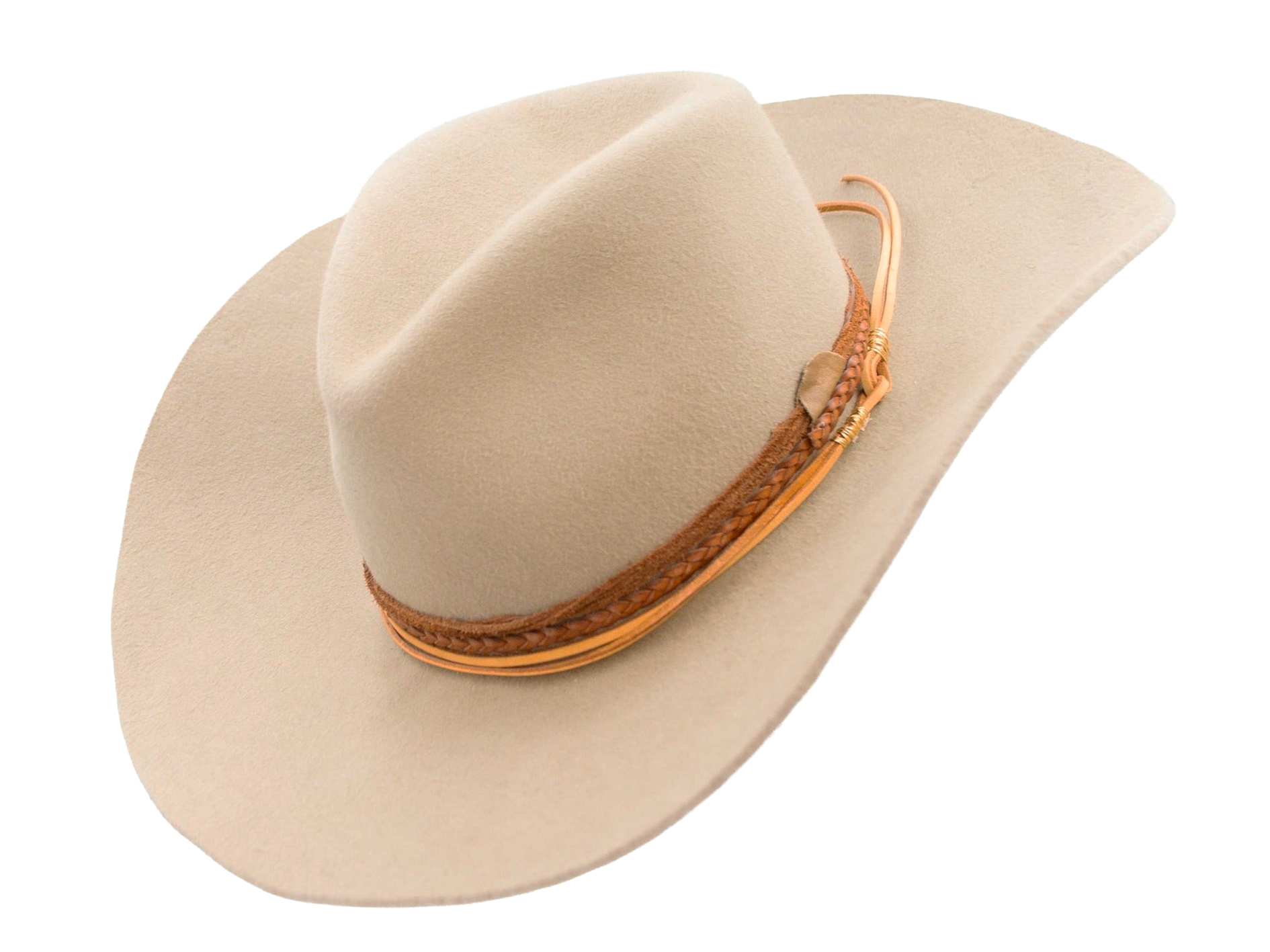
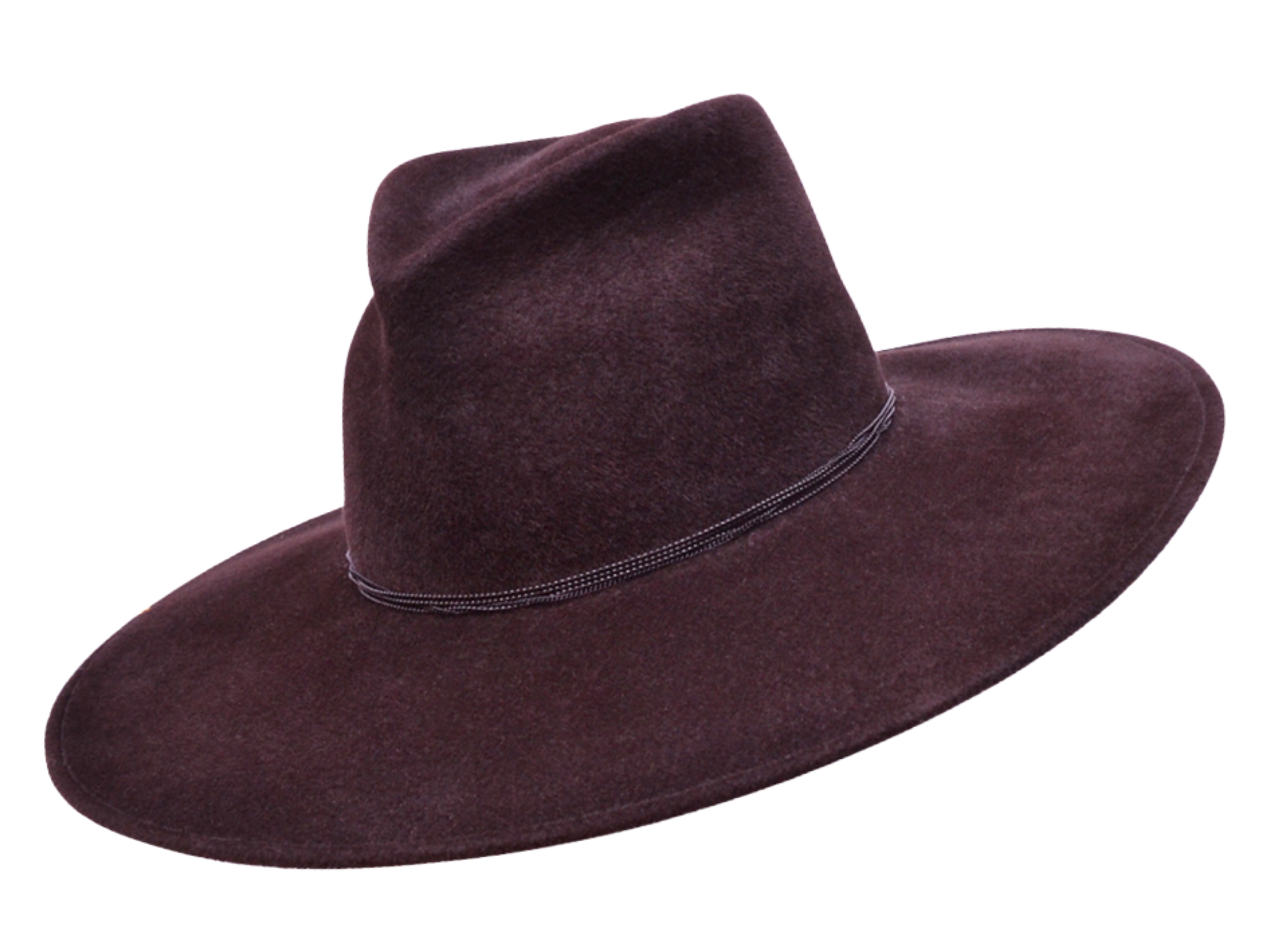
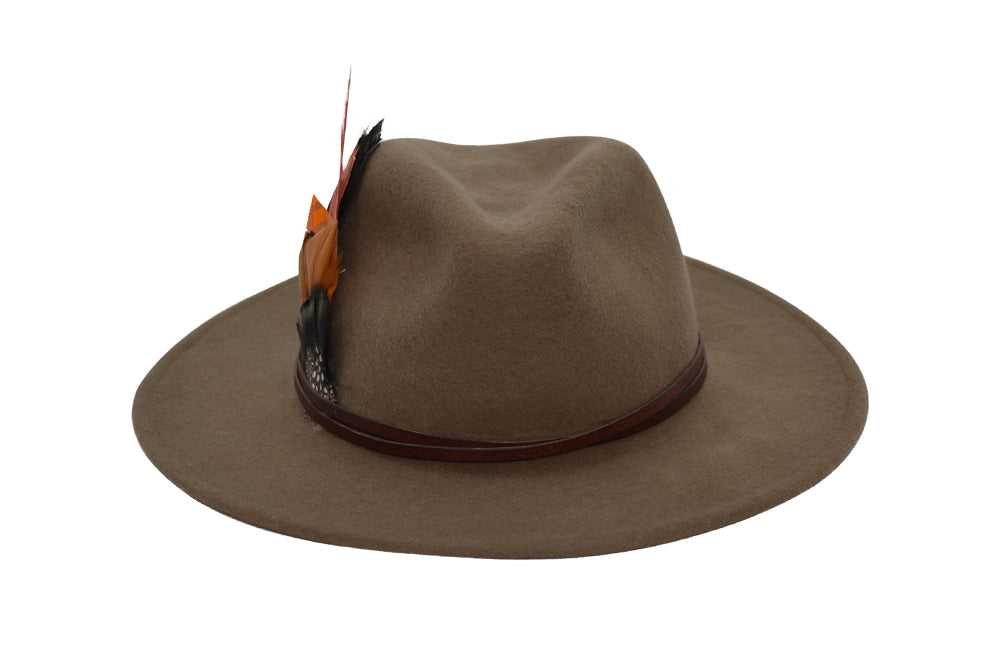
Start by choosing one or two silhouettes that match your face shape and wardrobe, then decide on leather type and fit. Our Cody Rancher Felt at $245.00 CAD and the Nashville Rebel Rancher Hat at $185.00 CAD are good places to begin. For a lighter option, the Stardust Wool Felt Fedora at $90.00 CAD offers a refined shape.
Frequently Asked Questions
How do I choose a hat style for my face shape?
Start by identifying your face shape: oval, round, square, long or heart-shaped. Balance is the goal. Wider brims and higher crowns add width and height, which suits narrow or long faces, while a lower crown and a moderate brim with some curve suit round or square faces by adding structure without adding bulk. Try the silhouette on before deciding, and remember that personal style matters as much as proportion.
How should a leather hat fit?
A leather hat should sit snugly without pressing. It should rest just above your eyebrows and ears, and you should be able to slide one finger between the sweatband and your forehead. Measure your head circumference with a soft tape just above the ears and across the brow, then compare that with the size chart. If the hat slides forward or back, the fit is too loose; if it leaves a deep mark after an hour, it is too tight.
How do you care for a leather hat?
Brush off dust with a soft cloth or horsehair brush, and wipe light marks with a barely damp cloth, letting the hat air-dry away from heat. Condition the leather occasionally with a product suited to its finish, and store the hat on a shaped form or in a box so the crown and brim keep their shape. Avoid soaking the hat, and keep it out of direct sun and rain as much as possible.
Can a leather hat be reshaped?
Minor reshaping is possible for some leather hats by gently steaming the brim and working it into the desired curve, then letting it cool and set. Heavy reshaping can crack leather or damage the construction, so for significant changes, ask a professional milliner. Leather behaves differently by type, so check the care instructions for your specific hat before attempting any reshaping.

Laissez un commentaire